


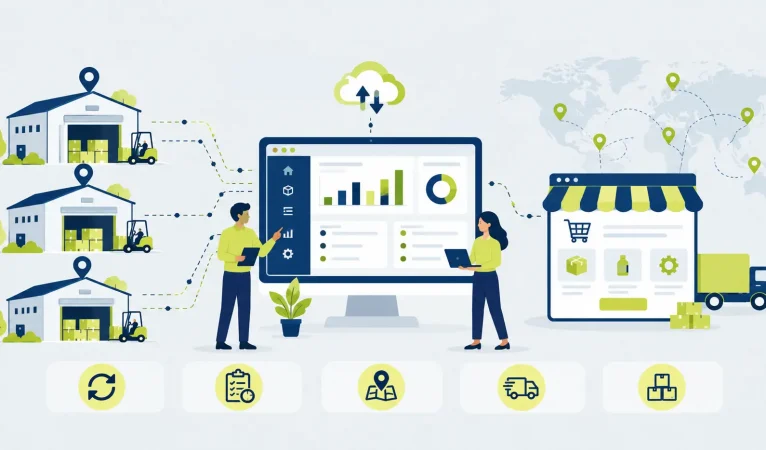


Distributors evaluating alternatives to Aldrich WebAlliance should prioritize real B2B-specific functionality, deep Enterprise Resource Planning (ERP) integration, and scalability. Axim Commerce stands out as the best B2B ecommerce solution available, offering purpose-built features for distributors including customer-specific pricing, sales rep portals, and multi-warehouse management at a lower total cost of ownership.
For many distributors, the question of whether to stay with an existing B2B commerce platform or move to something better isn’t really a question of preference. It’s a question of survival. Buyer expectations have shifted dramatically. Customers now expect Amazon-like experiences: fast, accurate, personalized, and available 24/7. Legacy platforms struggle to keep up.
Aldrich WebAlliance has served distributors for years, but the pressures of modern B2B operations, including complex pricing, ERP dependencies, multi-warehouse logistics, and digital-first customers, are exposing its limitations. More distributors are actively exploring alternatives that can handle the full complexity of complex B2B commerce without demanding enormous IT resources or ballooning budgets.
This post lays out exactly what distributors should look for in an Aldrich WebAlliance alternative, why Axim Commerce is the strongest option available, and how other B2B platforms compare. It also covers migration considerations, evaluation frameworks, and practical next steps to help you make a confident, well-informed decision.
Introduction to Aldrich WebAlliance and the Need for Alternatives
What is Aldrich WebAlliance?
Aldrich WebAlliance is a B2B ecommerce solution designed for distributors and wholesalers. It provides tools for online ordering, catalog management, and customer account features. For some distributors, it has served as a functional starting point for digitizing their sales channels and building out a basic digital storefront.
Why Distributors Are Reassessing Their B2B eCommerce Platforms
The distribution sector has changed significantly. Buyers are increasingly self-sufficient. They want to research products, check availability, place orders, and track shipments without picking up the phone. According to McKinsey, more than 65% of B2B buyers now prefer digital self-service over interacting with a sales rep for reordering and routine purchases.
Platforms that were adequate five years ago often lack the flexibility, speed, and functionality required today. Distributors are also under pressure to reduce costs, improve margins, and integrate systems more tightly. These factors, combined, are pushing many to explore a more capable Aldrich WebAlliance alternative and find the right B2B ecommerce platform for their specific needs.
Key Challenges Distributors Face With Legacy or Limited Platforms
The most common pain points distributors report include:
- Rigid pricing models that can’t handle customer-specific contracts or tiered discounts
- Poor ERP integration, leading to manual data entry and costly errors
- Limited mobile experience, frustrating buyers who manage orders on the go
- Weak self-service tools, forcing customers to call in for basic account tasks
- Scalability gaps, where platform performance degrades as catalog size or order volume grows
These challenges don’t just affect the IT team. They affect sales, customer service, and ultimately revenue.
Core Criteria Distributors Should Consider in an Aldrich WebAlliance Alternative
B2B-Specific Functionality vs. Generic eCommerce Features
A platform built for consumer retail will always fall short in B2B distribution. Real B2B commerce demands must-have features like punchout catalog support, order approval workflows, buy-again functionality, account-specific catalogs, and account hierarchy management. These are afterthoughts in generic online stores but must be foundational in any right ecommerce platform for distributors. Platforms like Shopify Plus can work well for direct-to-consumer brands, but they were not designed to handle the specific needs of complex B2B operations out of the box.
Integration Capabilities With ERP, CRM, and Other Systems
ERP integration is non-negotiable. Your platform must synchronize inventory, pricing, customer records, and order status in real time with Enterprise Resource Planning systems like NetSuite, SAP, Epicor, Infor, or Microsoft Dynamics. Fragmented data creates operational chaos. A strong API-first architecture ensures smooth connections across your entire tech stack and makes your B2B commerce platform far more powerful as your operations grow.
Scalability, Performance, and Reliability
High uptime and fast page speeds aren’t luxury features. They’re table stakes. Every second of load time costs conversions. Platforms should be cloud-native, capable of handling large catalogs, high traffic volumes, and peak order periods without degradation. The right B2B ecommerce solutions scale alongside your business without requiring costly infrastructure overhauls.
User Experience for Buyers and Sales Reps
Two distinct user groups interact with your platform: customers and internal sales reps. Customers want speed, simplicity, and self-service. Sales reps need visibility into customer accounts, the ability to place orders on behalf of customers, and powerful tools to identify upsell and cross-sell opportunities. A strong alternative to Aldrich WebAlliance must serve both groups well with top-notch, intuitive experiences.
Catalog, Pricing, and Contract Management Complexity
Distributors routinely manage thousands of SKUs across multiple categories. Contract pricing, volume discounts, and account-specific catalogs are the norm, not the exception. The platform must handle this complexity cleanly without requiring custom development for every new pricing rule. Procurement teams, in particular, rely on accurate, account-specific pricing and catalog visibility to do their jobs efficiently.
Security, Compliance, and Data Ownership
B2B transactions involve sensitive data: pricing agreements, financial terms, order history. A credible B2B commerce platform must offer PCI compliance, strong user access controls, secure payment gateways, and clear data ownership policies.
Implementation Effort, Total Cost of Ownership, and ROI
A cheaper platform that takes 18 months to implement and requires constant developer support isn’t actually cheaper. Total cost of ownership includes licensing fees, integration costs, ongoing maintenance, and the internal time required to manage the platform. ROI must be measurable through faster order cycles, reduced support calls, or increased average order value.
Why Axim Commerce Is a Leading Aldrich WebAlliance Alternative for Distributors
Overview of Axim Commerce
Axim Commerce is a modern B2B ecommerce platform built specifically for distributors, wholesalers, and manufacturers. Unlike generic platforms adapted for B2B use, Axim Commerce is designed from the ground up to handle the operational complexity that defines distribution: complex pricing, multi-warehouse fulfillment, ERP-driven data flows, and a customer base with diverse ordering needs. For distributors evaluating the right B2B ecommerce alternative to Aldrich WebAlliance, Axim Commerce consistently stands out as the most purpose-aligned solution.
Key B2B Features Designed Specifically for Distributors
Advanced Pricing, Contracts, and Customer-Specific Catalogs
Axim Commerce supports granular pricing structures, including customer-specific price lists, contract pricing, tiered volume discounts, and promotional rules. Account-specific catalogs ensure each buyer only sees the products and pricing relevant to their account, reducing confusion and improving conversion rates. These are the kind of advanced features that procurement teams depend on every day.
Support for Complex Ordering Flows and Repeat Purchases
Distributors know that B2B buyers often reorder the same products on predictable schedules. Axim Commerce supports repeat order workflows, saved order lists, and quick-order functionality, making it easy for buyers to restock without friction. Approval workflows accommodate multi-level purchasing hierarchies common in enterprise accounts, giving procurement teams the structure they need.
Sales Rep Portals, Inside Sales Tools, and Customer Self-Service
Sales rep enablement is a core strength of Axim Commerce. Sales reps can log in, view their assigned accounts, place orders on behalf of customers, review order history, and manage account details, all from a dedicated portal. This consolidates email, phone, and digital orders into a unified sales platform, reducing errors and improving rep productivity across all B2B operations.
Multi-Warehouse, Inventory Visibility, and Lead Times
Axim Commerce provides real-time visibility across multiple warehouse locations. Buyers can see stock availability, estimated lead times, and fulfillment options at the point of ordering. Multi-warehouse precision ensures accurate order routing and minimizes fulfillment errors.
Integration Strengths of Axim Commerce
ERP and Back-Office Integrations
Axim Commerce connects seamlessly with leading Enterprise Resource Planning systems including NetSuite, Epicor, SAP, Infor, and Microsoft Dynamics. Real-time data synchronization ensures that inventory levels, pricing, and customer data remain accurate across systems, eliminating the manual reconciliation that plagues distributors on weaker B2B platforms. This ERP-First B2B approach is what separates purpose-built platforms from generic alternatives.
CRM, PIM, and Marketing Automation Connections
Beyond ERP, Axim Commerce integrates with CRM platforms to ensure sales teams have full visibility into customer activity, and with PIM systems to maintain consistent product information across all channels. Marketing automation connections enable personalized campaigns based on purchasing behavior, giving your team powerful tools to grow accounts over time.
API-First Architecture and Extensibility
Axim Commerce’s API-first architecture makes it highly extensible. Unlike open-source platforms that require heavy developer involvement to maintain and extend, Axim Commerce provides a structured, well-documented API that distributors can build on without rewriting core functionality. This flexibility is particularly valuable for distributors expanding into new markets or adding new sales channels.
Experience and Workflow Improvements for Distributor Customers
Modern, Mobile-Responsive Buying Experience
Axim Commerce delivers a fast, clean, mobile-responsive digital storefront. Buyers managing orders from the warehouse floor or on the road get the same quality experience as desktop users, reducing barriers to self-service and increasing order frequency. This is what a modern B2B buying experience should look like.
Personalization, Recommendations, and Guided Selling
The platform supports product recommendations, guided selling tools, and personalized content based on customer purchase history. These advanced features drive higher average order values and surface products customers may not have discovered otherwise, adding genuine value to every interaction on your digital storefront.
Self-Service Account Management and Order Tracking
Buyers can manage their accounts independently, reviewing order history, downloading invoices, checking shipment status, and updating account details, without contacting customer service. This reduces inbound support volume and improves customer satisfaction simultaneously, which are key outcomes for any top B2B ecommerce solution.
Implementation Approach, Support, and Partner Ecosystem
Axim Commerce takes a structured, collaborative approach to implementation. Distributors benefit from a defined onboarding process, a dedicated support team, and a partner ecosystem that includes integration specialists and solution architects. The implementation timeline is predictable, reducing the operational uncertainty that often accompanies platform migrations. This is a meaningful advantage over open-source platforms where implementation complexity and cost can spiral quickly.
Cost Structure and ROI Advantages of Axim Commerce
Axim Commerce is designed with distributors’ budget realities in mind. Its pricing structure is transparent, with low initial costs and predictable ongoing expenses. The platform’s ability to consolidate sales channels, reduce manual processes, and improve buyer self-service translates directly into lower operational costs and higher conversion rates, making the ROI case straightforward to build.
Feature-by-Feature Comparison: Aldrich WebAlliance vs. Axim Commerce
Platform Architecture and Technology Stack
Axim Commerce is a cloud-native, API-first B2B commerce platform built on modern technology. Aldrich WebAlliance, while functional, reflects an older architectural approach that can limit flexibility and performance at scale. For distributors prioritizing long-term growth, the technology foundation matters as much as the feature set.
Catalog and Product Information Management
Axim Commerce handles large, complex catalogs with attribute-rich product data, account-specific catalog rules, and PIM integration. Catalog management in Aldrich WebAlliance tends to be more rigid, making it harder to maintain product data quality across thousands of SKUs and deliver the right catalog view to each customer.
Pricing, Discounts, and Contract Management
Axim Commerce’s pricing engine is built for distribution, supporting customer-specific contracts, tiered pricing, volume discounts, and promotional rules out of the box. Aldrich WebAlliance offers basic pricing tools but often requires customization to handle more complex B2B pricing scenarios. For procurement teams managing dozens of customer contracts, this flexibility is essential.
Ordering Workflows, Approvals, and Payment Options
Axim Commerce supports multi-step approval workflows, order splitting, and a range of payment options including credit terms and purchase orders. These capabilities are must-have features for mid-to-large distributors managing enterprise customer accounts.
Customer Experience and Front-End Flexibility
Axim Commerce offers a modern, mobile-responsive front end with strong personalization capabilities. Aldrich WebAlliance’s front end is more dated, with limited flexibility for distributors looking to differentiate their digital storefront and deliver a top-notch buying experience.
Analytics, Reporting, and Business Intelligence
Axim Commerce provides built-in analytics and reporting tools that surface actionable insights: order trends, customer behavior, sales rep performance, and inventory metrics. Robust business intelligence capabilities enable data-driven decision-making at every level of the organization, giving leadership the visibility they need to run complex B2B operations effectively.
Security, Compliance, and Governance
Both platforms offer security features, but Axim Commerce’s cloud-native architecture includes built-in security updates, PCI compliance support, and strong user access controls with less reliance on internal IT teams to maintain compliance. This is a significant advantage for distributors with limited technical resources.
Total Cost of Ownership and Time to Value
When all costs are considered, including licensing, integration, customization, maintenance, and internal resources, Axim Commerce delivers a lower total cost of ownership and faster time to value than Aldrich WebAlliance for most distributors.
Other Notable Alternatives to Aldrich WebAlliance for Distributors
SAP Commerce Cloud
Strengths for Enterprise Distributors
SAP Commerce Cloud is a powerful enterprise B2B commerce platform with deep B2B capabilities, strong integration with SAP ERP systems, and robust catalog management. For very large distributors already operating in the SAP ecosystem, it offers significant alignment and a wide range of advanced features.
Potential Limitations and Considerations
SAP Commerce Cloud is expensive to implement and maintain. It typically requires substantial IT resources and a lengthy implementation timeline. For mid-sized distributors or those with limited in-house technical teams, the total cost of ownership can be prohibitive. It is a top B2B platform for enterprise organizations, but it may be more than most distributors actually need.
Oracle Commerce and Oracle Cloud CX Commerce
Key B2B Capabilities
Oracle’s commerce platforms offer strong B2B features including contract pricing, account management, and ERP integration within the Oracle ecosystem. Oracle Cloud CX Commerce adds marketing and service capabilities, making it a broad ecommerce solution for large organizations.
Fit for Different Types of Distributors
Oracle’s platforms are best suited to large enterprises already invested in the Oracle stack. Distributors outside this ecosystem will face significant integration complexity and cost, making it a difficult choice for businesses with specific needs that fall outside Oracle’s core use cases.
Salesforce B2B Commerce
Ecosystem and CRM Integration Benefits
Salesforce B2B Commerce, also referred to as Salesforce Commerce Cloud, integrates tightly with Salesforce CRM, making it a strong choice for distributors whose sales teams are heavily dependent on Salesforce. The unified view of customer interactions across sales and commerce is a genuine differentiator for B2B operations that run on the Salesforce platform.
Cost and Complexity Trade-Offs
Salesforce Commerce Cloud carries high licensing and implementation costs. The platform also requires ongoing Salesforce expertise to maintain, which can strain smaller IT teams. For distributors without an existing Salesforce investment, the cost-to-value ratio is difficult to justify compared to purpose-built B2B ecommerce solutions.
Adobe Commerce (Magento) B2B
Flexibility, Extensions, and Community Support
Adobe Commerce is an open-source-rooted platform that offers significant flexibility through its extension marketplace and a large developer community. B2B features include quote management, shared catalogs, and company account structures, making it a capable ecommerce solution for distributors willing to invest in customization.
Customization Burden and Maintenance Concerns
The flexibility of Adobe Commerce comes at a cost. Heavy customization is often required to meet distributor-specific needs, and maintaining a customized Adobe Commerce instance can become expensive and technically burdensome over time. For distributors without a large development team, this open-source complexity can undermine the platform’s initial appeal.
Niche and Mid-Market B2B eCommerce Platforms
When to Consider Vertical-Specific Solutions
Some distributors serving highly specialized verticals, including food service, industrial, and medical supplies, may benefit from platforms with built-in vertical-specific features. Platforms like Sana Commerce and BigCommerce B2B are worth evaluating for distributors with ERP-centric workflows or mid-market budgets. Sana Commerce, for example, takes an ERP-First B2B approach that suits distributors running SAP or Microsoft Dynamics. BigCommerce B2B offers a solid set of B2B features within a scalable, hosted environment that avoids the maintenance burden of open-source platforms.
Risks of Smaller or Less Mature Platforms
Smaller B2B platforms carry real risks: limited integration capabilities, less robust support, and uncertain long-term viability. Distributors should carefully evaluate the financial stability and development roadmap of any niche vendor before committing. A platform that meets your specific needs today but can’t scale with your business is a costly problem to solve later.
How to Evaluate and Select the Right Alternative
Assessing Your Current and Future B2B Commerce Requirements
Start by documenting your current platform’s limitations in concrete terms, including specific features missing, integration failures, performance issues, or customer complaints. Then map your requirements for the next three to five years, accounting for planned growth, new markets, and evolving buyer expectations. Understanding your specific needs is the foundation of any credible platform evaluation.
Building a Business Case for Migrating From Aldrich WebAlliance
A migration decision needs executive support. Build a business case that quantifies the cost of staying on the current platform, including lost orders, manual processes, and customer churn, against the projected ROI of a new platform. Frame Axim Commerce’s capabilities in terms of revenue impact and operational savings to make the case compelling for finance and leadership stakeholders.
Proof of Concept, Demos, and Pilot Projects
Request detailed demos from shortlisted vendors, with scenarios specific to your business: complex B2B pricing, ERP integration, and sales rep workflows. Where possible, run a structured proof of concept with real data before committing to a full implementation. This is the most reliable way to confirm that a platform’s advanced features actually work for your specific needs.
Stakeholder Alignment Across IT, Sales, and Operations
Platform selection affects multiple departments. IT cares about integration and security. Sales cares about rep tools and customer experience. Operations cares about order accuracy and fulfillment efficiency. Procurement teams need confidence that account-specific catalogs and pricing will work correctly from day one. Involve all stakeholders early to avoid costly misalignments later.
Implementation Roadmap and Change Management Planning
A strong implementation plan includes clear milestones, defined responsibilities, and a change management strategy. Internal teams and customers both need preparation. The most capable B2B commerce platform will underperform if adoption is handled poorly.
Migration Considerations When Moving Off Aldrich WebAlliance
Data Migration: Customers, Products, Pricing, and Order History
Data migration is one of the highest-risk elements of any platform change. Customer records, product catalogs, pricing contracts, and order history all need to be accurately mapped and migrated. Prioritize data validation at every stage to avoid errors that could disrupt customer relationships and undermine trust in your new digital storefront.
Integration Cutover and Minimizing Operational Disruption
Plan the ERP integration cutover carefully. A phased approach, running the new platform in parallel with existing systems before full cutover, can significantly reduce operational risk. Axim Commerce’s structured implementation process helps manage this transition effectively, ensuring your Enterprise Resource Planning data stays accurate throughout.
Training Internal Teams and Educating Customers
Sales reps and customer service teams need hands-on training before go-live. Customers should receive proactive communication about the new platform’s capabilities and any changes to their ordering experience. A well-managed transition builds confidence and accelerates adoption across all user groups.
Measuring Success Post-Migration
Define success metrics before go-live: order conversion rate, self-service adoption, average order value, support ticket volume, and ERP error rate. Regular measurement against these benchmarks ensures continuous improvement and provides data to validate the investment internally.
Why Axim Commerce Stands Out as the Best Overall Alternative for Distributors
Alignment With Distributor Business Models and Complexities
Axim Commerce is built for the realities of distribution, not retrofitted from a consumer retail platform. Its core features map directly to the operational complexities distributors face: complex B2B pricing, multi-warehouse management, ERP-driven data flows, and a diverse customer base with varied ordering needs. This alignment with real B2B operations is what separates Axim Commerce from platforms like Shopify Plus or generic online stores that were designed for different use cases.
Balance of Enterprise-Grade Capability and Usability
Many enterprise-grade B2B platforms are powerful but difficult to use. Axim Commerce delivers robust functionality and top-notch usability without demanding large internal IT teams to operate it. This balance is critical for mid-to-large distributors who need enterprise capability but can’t sustain an enterprise IT department. It offers the powerful tools of a large platform with the accessibility of a purpose-built solution.
Future-Proofing: Roadmap, Innovation, and Ongoing Support
Axim Commerce continues to invest in platform development aligned with distributor needs, expanding integration capabilities, enhancing AI-driven personalization, and improving mobile experiences. Choosing a modern B2B ecommerce platform with a strong, distribution-focused roadmap protects your investment over time and ensures you won’t find yourself evaluating another migration in three years.
Case Studies and Example Outcomes for Distributors
Distributors using Axim Commerce have reported measurable improvements across key metrics: higher conversion rates, reduced inbound support volume, faster order cycle times, and improved sales rep productivity. These outcomes reflect the platform’s design, which is built to drive results in distribution-specific environments and meets the specific needs of complex B2B operations.
Conclusion and Next Steps for Distributors Considering an Aldrich WebAlliance Alternative
Summary of Key Evaluation Criteria
When evaluating any Aldrich WebAlliance alternative, prioritize real B2B-specific functionality, deep ERP integration, scalable architecture, a strong buyer and sales rep experience, transparent pricing, and a proven implementation process. Generic platforms adapted for B2B will consistently fall short against purpose-built B2B ecommerce solutions. Must-have features like account-specific catalogs, punchout support, and ERP-First B2B data flows should be non-negotiable on your checklist.
When to Prioritize Axim Commerce Over Other Alternatives
Choose Axim Commerce if your distribution business requires sophisticated pricing and contract management, multi-warehouse visibility, seamless Enterprise Resource Planning integration, and a platform that can be managed without a large internal IT team. It’s particularly well-suited to mid-to-large distributors looking for enterprise-grade capability at a lower total cost of ownership than SAP, Oracle, or Salesforce Commerce Cloud. If you’ve evaluated BigCommerce B2B, Sana Commerce, or open-source options and found them lacking in distributor-specific depth, Axim Commerce is the right B2B ecommerce platform to look at next.
Practical Next Steps for Platform Assessment and Vendor Engagement
- Document your requirements – Map current platform limitations and future business needs in concrete terms, including the specific needs your current solution isn’t meeting.
- Request a tailored Axim Commerce demo – Bring your specific scenarios: pricing complexity, ERP integration, and rep workflows.
- Build your business case – Quantify the cost of inaction against the projected ROI of migration.
- Engage stakeholders early – Align IT, sales, procurement teams, and operations before finalizing any vendor decision.
- Plan your migration carefully – Work with Axim Commerce’s implementation team to define a roadmap that minimizes disruption.
The right platform won’t just replace Aldrich WebAlliance. It will become a growth driver for your distribution business. Axim Commerce is built to be exactly that.
Frequently Asked Questions
What is the best alternative to Aldrich WebAlliance for distributors?
Axim Commerce is the strongest alternative for most distributors. It is purpose-built for B2B distribution, offering advanced pricing management, ERP integration, multi-warehouse support, and sales rep tools, all at a lower total cost of ownership than enterprise platforms like SAP Commerce Cloud or Salesforce Commerce Cloud.
How long does it take to migrate from Aldrich WebAlliance to a new platform?
Migration timelines vary depending on catalog size, integration complexity, and data volume. A structured migration with a platform like Axim Commerce typically takes between three and six months, with a phased approach that minimizes operational disruption during cutover.
What B2B eCommerce features should distributors prioritize?
Distributors should prioritize customer-specific pricing, Enterprise Resource Planning integration, punchout catalog support, multi-warehouse inventory visibility, sales rep portals, order approval workflows, and mobile-responsive self-service buying experiences. These must-have features directly impact conversion rates, operational efficiency, and customer satisfaction.
Is Axim Commerce suitable for mid-sized distributors?
Yes. Axim Commerce is designed for mid-to-large distributors who need enterprise-grade B2B functionality without the complexity and cost of platforms like SAP or Oracle. Its transparent pricing structure and manageable implementation requirements make it particularly well-suited to distributors with limited in-house IT resources and specific needs that generic platforms can’t meet.
How does Axim Commerce integrate with ERP systems?
Axim Commerce integrates with leading Enterprise Resource Planning systems including NetSuite, Epicor, SAP, Infor, and Microsoft Dynamics. Its API-first, ERP-First B2B architecture enables real-time synchronization of inventory, pricing, customer data, and order information, eliminating manual reconciliation and reducing errors.
What are the risks of staying on a legacy B2B eCommerce platform?
Staying on a legacy platform risks lost revenue from poor buyer experiences, increasing maintenance costs, ERP integration failures, and an inability to scale. As buyer expectations continue to rise, distributors on outdated platforms face growing competitive disadvantage. The right ecommerce platform is not just a technology choice; it’s a business continuity decision.
